graphic
   Sparks' logo

1

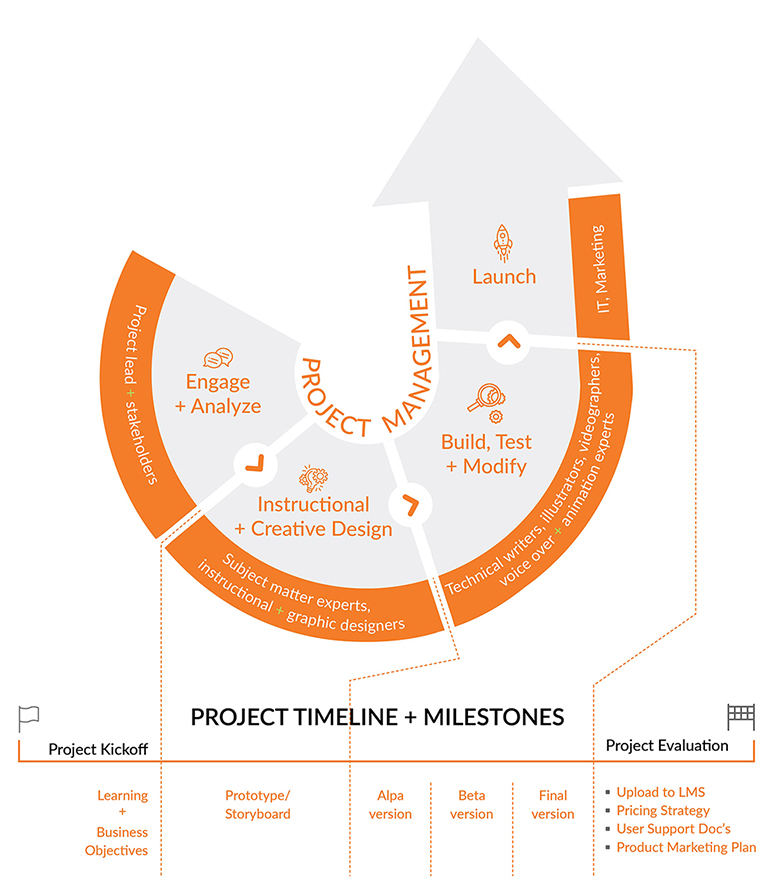
DEVELOP LEARNING AND BUSINESS OBJECTIVES FOR DESIGNING ELEARNING

Designing elearning is about more than putting content online—it’s about creating meaningful learning experiences that drive real results.  At Spark + Co., our approach to elearning course design combines instructional expertise with product thinking to ensure your course is engaging, effective, and aligned with your broader organizational goals.  We work collaboratively with you to transform your knowledge into a structured, learner-centred experience that not only builds skills but supports behaviour change and measurable outcomes.  Whether you’re educating internal teams or external audiences, we design elearning that delivers value for your learners and your organization.

Our elearning course design begins with a learning objective.  Through a consultative process, we identify and develop a learning objective(s) for the project.  An objective aligned with your overall business goals.  This can involve engaging key stakeholders in the process, developing a profile of the target audience, and considering any constraints that may need to be considered.

A typical question we ask at this stage of designing elearning is “What do we expect the audience to be able to do after completing the training course?” It’s not about what they know, it’s about what they do.

A key question at this stage is to confirm the course’s level of interactivity, which affects the project budget (the higher the interactivity, the higher the required budget).

levels of interactivity in elearning

Level of Interactivity – an essential component in Elearning Course Design

Instructional Products

One differentiator of Spark + Co in designing elearning is that we combine product and instructional design to create exceptional instructional products.
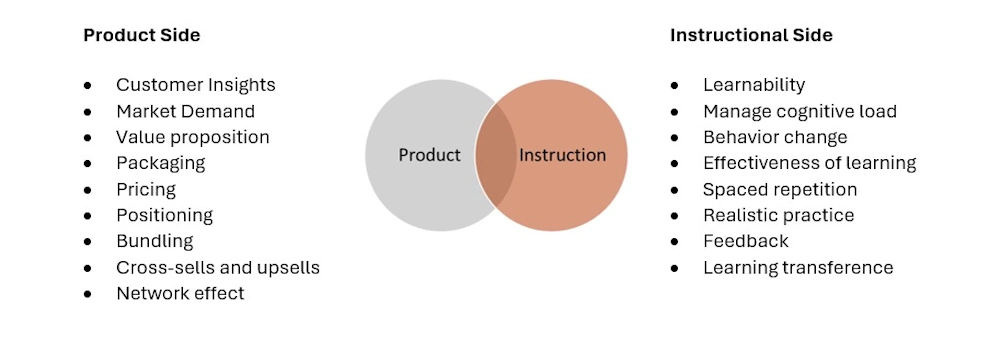
an instructional product approach to designing elearning

Factors Considered In Designing Elearning

We leverage our expertise in instructional design, complemented by innovative approaches from product designers and developers, to optimize your elearning course design.  It ensures that your instructional product is engaging, highly effective and delivers value for your target audience.

“I rated Spark + Co. 10/10 for our project because the development process was well organized, the timelines and objectives were well planned and communicated and all aspects of the project were completed on time and on budget. Also, I felt like the writing of the narration was particularly well done. It hit the mark as being informational but also conversational, like real people were communicating not just “reading the slides.”

BC FOREST SAFETY COUNCIL

2

Instructional + Creative Design

At this stage of designing elearning we collect and build content in collaboration with your key stakeholders to develop a prototype module or storyboard.  This engages the learner in an active rather than passive manner.  We define learning outcomes to meet the overall learning objective(s).  We then design a custom course outline and brainstorm creative ideas for the course development.  While always keeping user experience top of mind in the elearning course design, ensure the course navigation is intuitive and straightforward.

Working with content in designing elearning is similar to adapting a novel into a movie.   First, the book needs to be rewritten into a screenplay.  Then, we take your content in various forms and organize and convert it into engaging elearning.  When developing content, we usually work with your subject matter experts, but if requested, we can provide them.

In designing elearning we work with experts on every project who help us source, edit, and vet content.  Experts we regularly work with include clinicians, researchers, legal and policy experts, financial experts, engineers, medical doctors, environmental scientists, psychiatrists, psychologists, child development experts, and many more.

Emotional Elearning Course Design

If your desired outcome is to change a learner’s behaviour, then emotional design is a critical factor.  Courses that prioritize emotional connections are more personal, leading to longer-lasting behaviour change.  In designing elearning we want learners to feel emotionally invested in the course to achieve this.  We achieve emotional design through visuals, writing, and instructional approaches.

Examples of some instructional approaches that result in longer-lasting changes in behaviour include:

  • Narrative/Storytelling – using stories to immerse the learner in the situation
  • Realistic Scenarios – providing opportunities to practice the changes
  • Day-in-the-life – enabling learners to step into the perspective of someone and experience what it’s like in their life
  • Case study/post-mortem – looking at scenarios or situations that have happened and deconstructing them to identify negative actions and rewrite the outcome
  • Gamification – providing the learner with challenges they can complete and using various methods and tools to complete them

Interactive Media + Tools

This stage of the elearning course design also includes creating the interactive media, which could include

  • videos
  • interactive videos
  • workbooks
  • animations
  • interactive quizzes
  • e-books or interactive pdfs

“Spark + Co possessed the educational expertise, technical skills, and a unique ability to translate our research team’s vision into a functional, practical and multifaceted learning management system.” 

University of Calgary

3

Build, Test + Modify

As part of the elearning design and the custom course development, we will produce three iterations for you to review and provide feedback on.  This allows us to refine the module to ensure that we meet our client’s specifications and preferences.  We use online review processes to streamline and fast-track the development.  We then undertake a quality assurance process to eliminate grammatical, functional and visual errors.

A typical question we will ask at this stage is “What might we anticipate that people could get wrong?” or “Are there any aspects that are particularly tricky?”

During this stage of the elearning design, we will work with some or all of the following technical experts:

  • subject matter experts
  • technical writers
  • illustrators
  • voice over experts
  • videographers
  • animation artists

Marketing + Designing Elearning

For organizations serving external audiences, an online course is not simply training—it is a public-facing instructional product that must attract, engage, and convert learners into participants, members, or customers.  This means we design elearning courses not only for learning effectiveness but also to support the organization’s broader goals, such as growing its audience, expanding its impact, and generating sustainable revenue streams.

Spark + Co. is our online training partner, and we love working with them.  Experts in their field they think out of the box and find practical, engaging solutions for our business and our clients.”

Director Client Solutions, Realize Solutions

4

Course Launch

Once the elearning course design and development are complete, Spark + Co. assists with launch activities, such as providing support during the implementation of the module.  This can include

  • Uploading to an LMS (Learning Management System)
  • Q+A to address user and/or technical issues
  • User support documents
  • Marketing and communications plans
  • Pricing strategies

We provide 30 days post-launch support and also routinely set up a maintenance program with our clients to keep content up to date or to design new modules or components.

“The team was amazing to work with and were both adaptable and highly skilled in meeting our needs.” 

The Belonging Network / AgedOut

Start Your Elearning Course Design Journey

The first step in beginning your journey to create a highly engaging instructional product is to book a complimentary consultation with one of our instructional designers (see below).  They’ll discuss the goals of your project with you and provide an estimated budget and timeline for completing your elearning course design.  Why wait?  Book your consultation now.

“I highly recommend working with Spark + Co. and I would hire them again in the future.” 

Concert Properties

FAQs – Elearning Course Design

What is involved in designing elearning?
Designing elearning is a structured process that goes beyond content development.  It includes defining learning and business objectives, creating engaging instructional and creative concepts, building and testing the course, and supporting launch and ongoing updates.

How long does elearning course design take?
Timelines vary depending on the scope, level of interactivity, and complexity of the content.  Most projects move through multiple stages—design, development, and review—with several iterations to ensure quality and alignment with your goals.  A typical 1-hour course takes 16 weeks from initiation to launch.

How much does elearning course design cost?
Costs depend on factors such as course length, level of interactivity, media requirements, and subject matter complexity.  During the initial consultation, we provide a clear estimate based on your specific needs and priorities.

What level of interactivity should my course include?
In designing elearning the right level of interactivity depends on your learning objectives, audience, and budget.  More interactive courses tend to drive stronger engagement and behaviour change, but we help you find the right balance for your project.

When designing elearning do you provide multimedia and interactive elements?
Yes.  As part of elearning course design, we can develop a range of interactive media, including videos, animations, scenarios, quizzes, and downloadable resources, to enhance engagement and learning effectiveness.

How do you ensure the course actually changes behaviour?
Our elearning course design keeps behaviour change in mind by using proven instructional strategies such as storytelling, realistic scenarios, and practice-based learning.  Emotional engagement is a key part of creating lasting impact.

What does your elearning course design review process look like?
In designing elearning we typically provide three rounds of review, allowing you to give feedback and refine the course.  This iterative approach ensures the final product meets your expectations and performs effectively.

Do you support course launch and implementation?
Yes.  In designing elearning we can assist with LMS setup, user support materials, and launch planning—including marketing and communications strategies where needed.

Can you help us market or sell our course?
Yes.  For organizations offering courses externally, we design elearning as a full instructional product—supporting not just learning outcomes, but also audience growth, engagement, and revenue generation.

Do you offer ongoing support after launch?
We do.  We can provide maintenance, updates, and additional module development to keep your course relevant and effective over time.